Yearly Archives: 2017

2019 Round Robin

Round Robin—ANYTHING GOES!

This coming year, 2019, we will have a Round Robin, that you will choose your own type of exchange!

Choice 1, Traditional Robin: You can do a block (no larger than 16 ½”) to exchange with group. The members will add a border (4 sides) each time the box is exchanged.
Choice 2, Row Robin: You will make a row ( 60” maximum width) The members will add a row each ex-change.
Choice 3, Two Quilt blocks (16 ½” is the maximum size): The mem-bers will make two blocks according to your specific directions.
Choice 4, Half Row Robin: You will make a block (16 ½ “ is maximum side). The members will add only borders. on 2 sides, these sides must touch.

Each Participant must include a JOURNAL This Journal must give rules and instructions to give guid-ance for the participants for each exchange. This is where you will state what you want!

Here are a few questions that you might want to include in your journal:

  • Do I want a specific technique for each round? (Triangles, squares, 3-d piecing, appliqué, or quilters choice) if so what are they?
  • Do I want the members to use only the fabric given or can they add their own fabric?
  • Do I want embellishments? (buttons, ribbons, etc.)

Each Participant must have a box with handle. This box should contain:

  • Journal
  • Your starter block or row
  • 1-2” yards of the background fabric, and a variety of fabrics to be incorporated in your quilt. You will decide if you want to allow only your fabric or allow the participants to add their fabrics.

Measure, Measure, Measure and use a good ¼” seam and use your best sewing skills. Work on another person’s quilt, as you want her to work on your quilt!

If you find yourself at a loss for ideas, search on Pinterest for Row Quilt Ideas, or call a quilting friend for some inspiration! You can always give me or Terry a call if needed.

This should be a fun activity! Let your creativity sparkle!

Points of contact:
Jean Berk
Terry Ruby
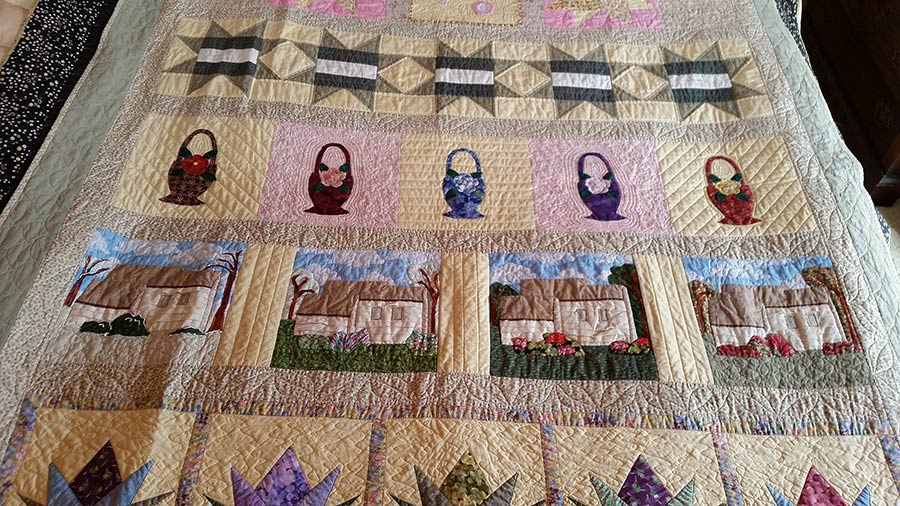
Photo Credit:
Seasons quilt submitted by Bess Scheid. While the quilt is owned is by another quilter, Bess made the Christmas row, Jeanne Kehl made the daffodils row and Johanna Roll made one of the rows in this Row Robin.
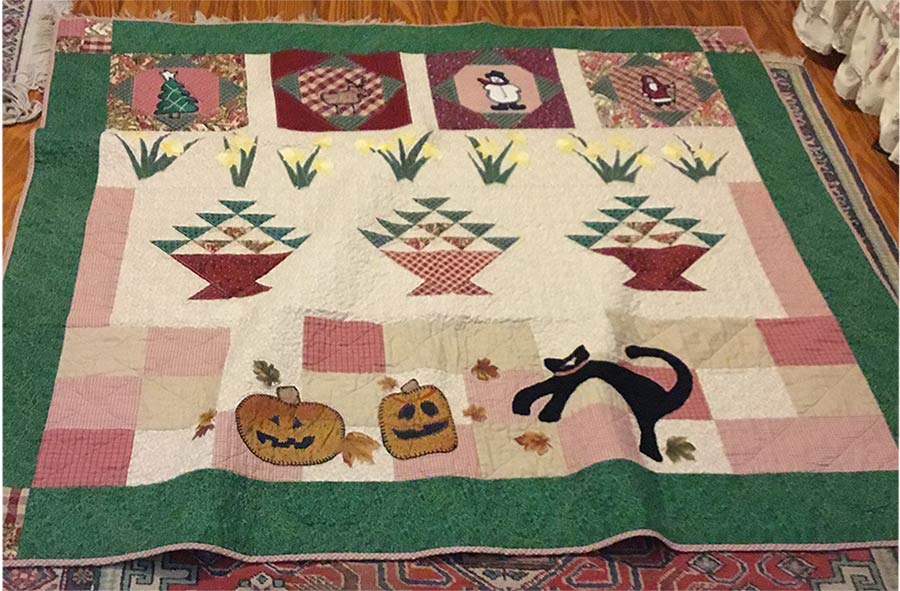
Photo Credit:
This Row Robin quilt photo is submitted and owned by Johanna Roll. The rows in this Row Robin were made by members of Quilting On the Line Guild.
By |2019-01-31T13:36:40-05:00December 2nd, 2017|uncategorized|0 Comments

Raffle Ticket Sales At Annapolis Quilt Guild

Johanna Roll, Susan Stiles and Ellen King took our beautiful 2017 raffle quilt to the Annapolis Quilt Guild to sell raffle tickets. Our trip included a visit to Cottonseed Glory Quilt Shop

While at their guild meeting, we got to learn about some of the projects they do and how their meetings and staff are organized. Great ideas for us! Then we stayed for their guest speaker, David M. Taylor, an extraordinary appliqué artist whose presentation was wildly entertaining and unforgettable.

A wonderful evening. NOTE!!  The quilt is available to road trips! It’s really fun to visit other guilds and help raise money for our operations in the coming year. Join us!

Article and photo submitted by Susan Stiles

By |2017-12-02T19:00:11-05:00September 16th, 2017|uncategorized|0 Comments

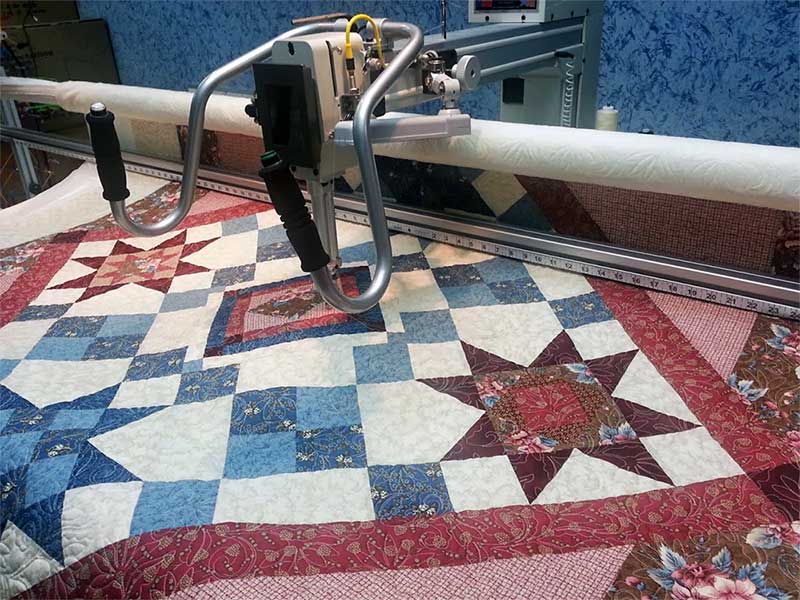
Preparing Tops for Longarming

Getting Your Quilt Tops Ready for Machine Quilting by a Professional Longarm Quilter

By Susan Slattery, Reprinted from Threadworks Quilting

Not all professional longarm quilters have the same preparation requirements or preferences.  The following is a list of guidelines that I provide to my clients.  Check with your longarmer to see how they would like for you to prepare the quilt, which may differ from what you see here:

To prewash or not to prewash? Whether to prewash your quilt top and backing or not is a preference – there is no right or wrong answer. You should, however, be consistent and wash all or nothing, including the batting. Because unquilted batting is difficult to wash without damaging it, I generally prefer not to prewash. Here is a helpful article with points to consider: http://www.connectingthreads.com/tutorials/To_Prewash_or_Not_to_Prewash__D85.html

The quilt top Remove all loose threads. Inspect carefully for open seams that may have come loose during handling, and repair them if necessary. If I don’t notice them, the computerized quilting system could catch them and damage the quilt.  (Note:  Not all longarm quilters use computerized system as I do. Many hand guide the quilting patterns. Open seams on the top should be repaired nonetheless.)

Borders As quilters, we have all faced challenges with borders at one time or another. As you check your quilt top to insure it is ready to quilting, lay it on a flat surface, such as the floor or a bed or a large table. Do your borders lay flat or are they wavy? If they are only slightly wavy, I do have a few tricks up my sleeve and I may be able to work with them. Depending on the circumstances, this may or may not require an additional fee. If the borders are excessively wavy, you should remove, resize and reattach them prior to quilting.

Pressing You will want to insure that both your quilt top and your back are carefully pressed and all seams are flat. Using starch or sizing is really helpful (but not required), as it makes it easier to work with and quilt. Fold neatly. I may give your quilt top and back a light press once more before loading onto the frame if needed, but it needs to be pretty well pressed already.

Backing Remove all loose threads. Your backing should be a minimum of 4″ wider than the quilt top on all sides (but need not exceed 6″). In other words, if your quilt top is 90″ x 100″, your backing should be at least 98″ x 108″. Please take the time to square the backing. This is very important for insuring your quilt loads square on the frame. If you will need to piece the backing, you should cut off the selvedge edges on the edges that will be sewn together to make a seam. Selvedge edges are usually a little thicker and bulker than the rest of the fabric, and a this bulkiness will be noticeable in the finished quilt. Also, they shrink at a different rate when the quilt is washed, creating a puckered line. Also, make the seams 1/2″ (rather than than the 1/4″ seams on the top) and press the seam open.

Batting If you are providing your own batting, make sure the piece you plan to use is at least 3″ wider (but no more than 6″ wider) than the quilt top on all sides. That means if your quilt top is 90″ x 100″, your batting should be at least 96″ x 106″.

The quilt sandwich Don’t baste or pin the quilt layers together. Basting will be done on the longarm frame. If your quilt top or backing are directional, mark the top center with a large and obvious note attached by safety pin. Make sure you remember to mention it also.

Here is another list by professional longarm quilter and guild member, Johanna Roll.

Checklist for Getting Tops Ready for Longarming

By Johanna Roll

  1. This begins with block construction. Press all blocks as they are constructed. Make sure seams do not have a little folded back part. Press open if necessary.
  2. Make sure quilt is square and lays flat. There should be no peak in the center of the blocks or quilt. Trim off excess.
  3. Be sure all seams are sewn and clip threads. Trim off dog ears.
  4. If edges are on bias, stay-stitch around quilt with shortened stitch 1/8” from edge.
  5. If embellishments are used, be sure you know how your quilter feels about them.
  6. Keep all three layers separate, do not pin or baste together.
  7. Make sure the backing and batting are at least 4-5” larger than quilt on each side.
  8. Backing needs to be square or rectangular. Opposite edges need to be the same length.
  9. Don’t use a sheet for backing. The thread count is too high and the needle may break threads.
  10. Press completed top

One method to put on borders without waves:

By Johanna Roll

  1. After all blocks are put together, press entire top flat and measure and write down top width, middle, and bottom. Calculate the average of this number and cut 2 border strips this length.
  2. If fabric allows, use lengthwise of material since there is less stretch in this direction. If WOF is used, be careful not to stretch the fabric.
  3. Pin these strips on 2 sides of the top. Pin each end of strip to ends of quilt. Fold both together in half and pin centers together. Follow this method until pins are 10” to 12” apart. Sew on.
  4. Iron seams and measure the sides that need borders in the same way as above. Cut 2 more strips and pin, pin, pin. Sew on.
  5. Iron seams.
  6. Call your longarmer and make an appointment to give them your quilt.
  7. Enjoy your beautiful new quilt!
By |2017-08-30T09:12:29-04:00August 23rd, 2017|uncategorized|0 Comments

Ten Things To Think About To Find Your Artistic Voice

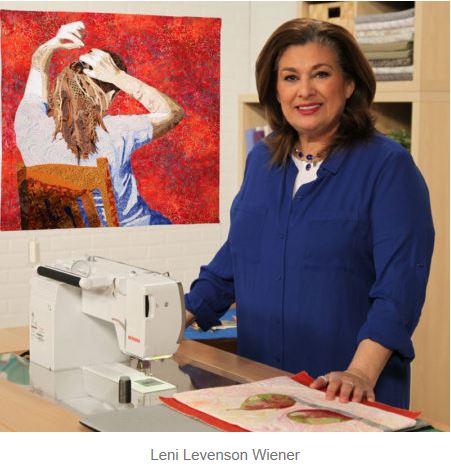
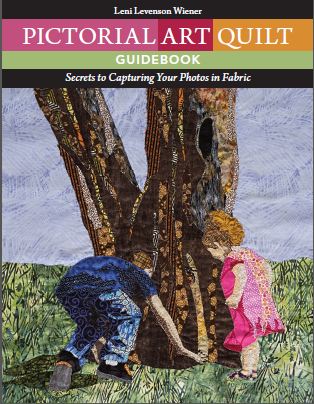
Leni Levenson Wiener is a fabric artist specializing in art quilts, and the author of three books on creating quilts from photographs. (Leni came to QOL in June 2013.) Besides teaching workshops at quilt guilds and quilt shows, Leni frequently gives talks to quilters on color, value and print scale; finding your artistic voice, and trunk shows of her evolution as an artist. In addition, through her website, Leni offers a service to coach emerging artists to help them find their unique voice.

Learn more at her website: http://leniwiener.com/art-quilt-voice-coaching/

Leni Levenson Wiener

Ten Things To Think About To Find Your Artistic Voice

By Leni Levenson Wiener, republished with permisson.

1. Quilt what you know
Working from your own life experiences will insure your artwork is a reflection of you

2. Embrace what you love
Your artwork should be something you feel compelled to create

3. Abandon what you dislike
Embrace the techniques you enjoy and let go of all the rest

4. Trust your instincts
Don’t overthink and over analyze, don’t ask everyone for their opinion, trust your intuition

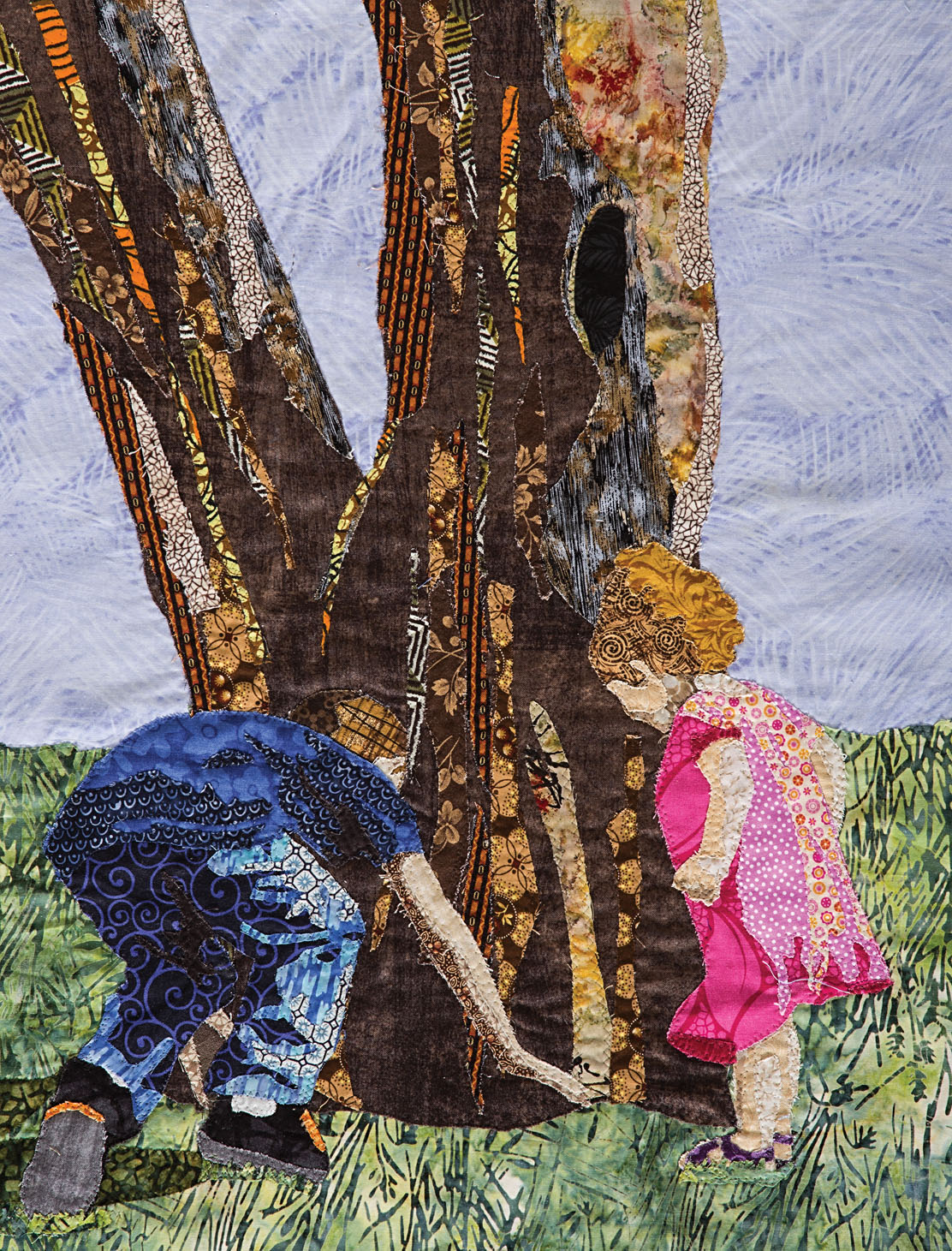
The quilt pictured, entitled “Explorers”, is the step by step project featured in Leni Levenson Wiener’s  book “Pictorial Art Quilt Guidebook” .

5. Develop your own working style
Take bits and pieces from everywhere, mix them together and toss things aside until you have a set of working skills that reflect who you are as an artist.

6. Decide on message
Think about what you want your art to communicate, then make art that fits your purpose

7. Create a thread of continuity
Spend some time developing pieces that are thematically, technically and/or color related; work in a series, sustaining these will yield a consistent body of work

8. Engage in quiet reflection
Stress and art are not good companions, it is important to periodically disengage from the world around you to reconnect with your inner voice

9. Work for yourself
Stay true to your own vision, don’t attempt to create art that you think will be chosen by a particular exhibition or gallery. If it doesn’t come from deep within you, it isn’t your voice

10. Expect your voice to change
Artists grow and evolve and change throughout their careers. As an artist, you must always stretch yourself and challenge yourself to do more; re-think, re-evaluate, and revisit your approach, your themes and your techniques. If you stand still your work will stagnate and become boring. Follow your voice where it leads you. Art is a path you follow, not a place to reach and rest.

By |2017-08-09T12:02:14-04:00August 8th, 2017|uncategorized|0 Comments

International Block Swap by Quilts Around The World

While attending the Baltimore Heritage Quilt Guild Quilt Expo 2017 see post, something unexpected I found at the show involved an international organization called Quilt Around the World. This an online quilting community and publisher, and they had a booth at the show staffed by a representative from Germany who explained (in extremely fast English!) one of their projects, the International Block Swap, which is just opening its 4th year. The goal is to provide a block swap that quilters from all over the world can participate in. Here’s how it works:

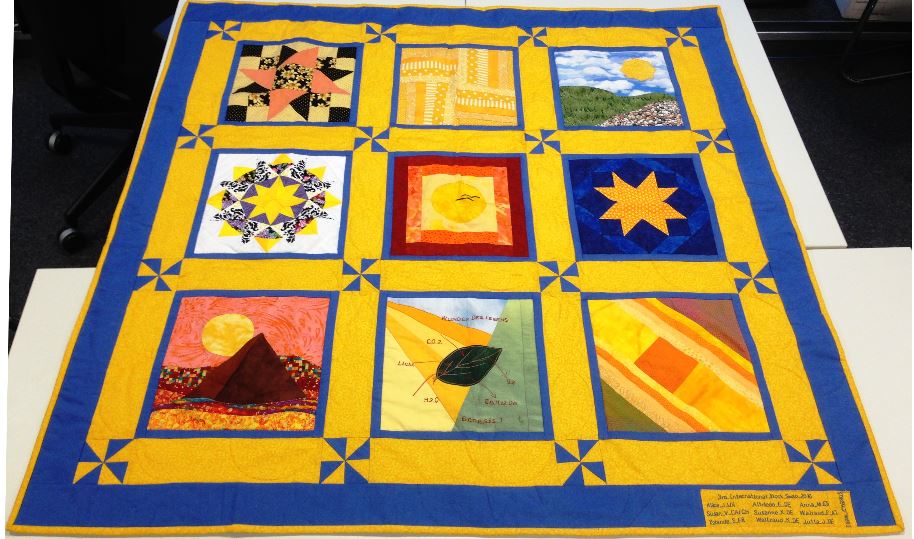
The theme for this swap is Nature. Quilters are challenged to make nine identical blocks capturing something about their personal connection with nature. The blocks must be 6” X 18” (finished) (6 ½” X 18 ½” raw).  (This somewhat odd size actually makes it easier to design with standard 6” x 6” blocks when you begin building your quilt.)  The color green must be present, and you can use any technique, block pattern, applique, or design; embellishments must be flat, in order to survive international shipping and handling. When you send your blocks, enclose 9 picture postcards of your town or region. These will accompany your blocks on their trip across the globe! Mail your nine blocks and postcards to the Quilt Around the World headquarters in Munich, Germany. You will receive a package of nine different blocks in return, made by quilters in far-flung lands.

Block Swap 2016 Quilt by Karin K., Germany

Block Swap 2016 Quilt by Alice J., United Kingdom

Block Swap 2016 Quilt by Natalie B., USA

For more information or to register, go to http://www.quilt-around-the-world.com/en/content/4th-international-block-swap-ibs4 The fee is 25 Euros (currently about $27 US$). The deadline is February 28, 2018 – next year.

I have flyers giving much more detail and I will bring them to the next guild meeting or you can download flyer here. I hope other QOL quilters will be as intrigued as I am to participate! We will have some unusual and unique projects to share at our 2018 Show and Tell.

I hope everyone has a chance to support other local guilds. It means a lot to be reminded and inspired that we are part of a truly global community of artists.

By |2017-03-25T08:02:00-04:00March 23rd, 2017|uncategorized|0 Comments

Visit to the Baltimore Heritage Quilt Guild Expo 2017

Visiting the Baltimore Heritage Quilt Guild Quilt Expo 2017 was wonderful. The creativity, originality, and workmanship of these quilters produced yet another dazzling show for this guild, which meets at the Woodbrook Baptist Church on Stevenson Lane in Baltimore City on the 2nd Tuesday of the month  www.baltimorequilters.com. They have been around for 32 years and have about 150 members. So many quilts, and each one more delightful than the next! Here are just a few of my favorites (see photos).

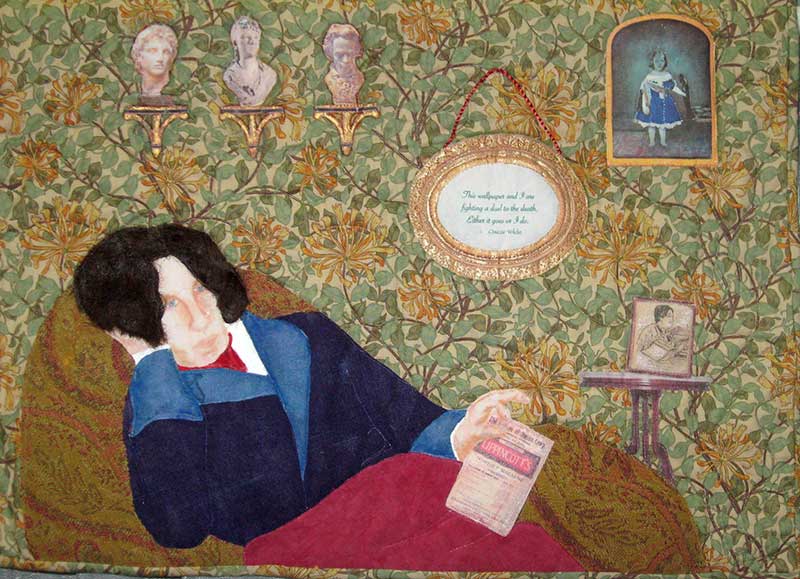
Famous Last Words, by Joan Muth Levin

Delilah’s Summer Day, by Karen Amelia Brown

Stash Explosion, by Sally Wingo

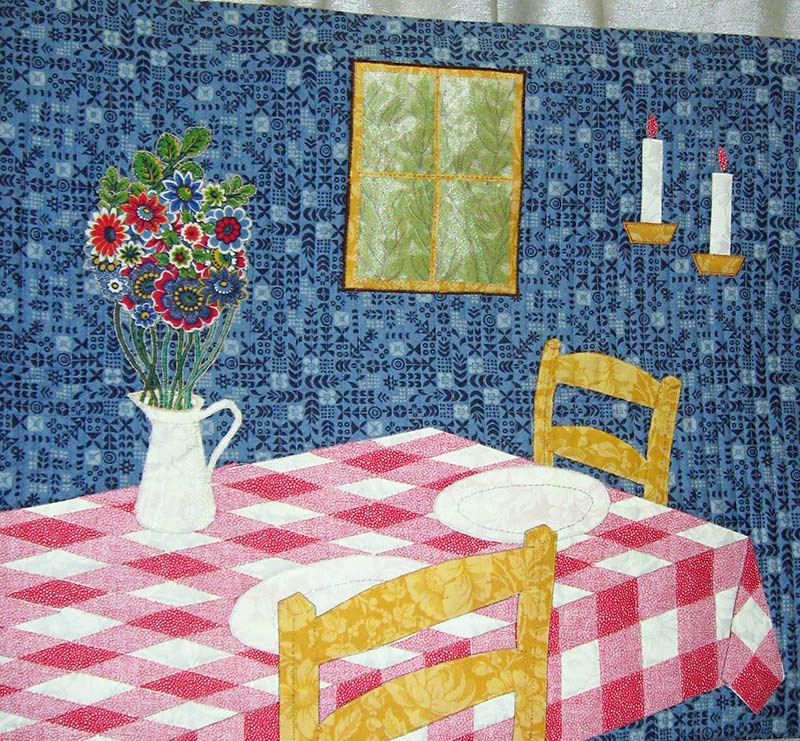
Dinner for Two, by Carol Rubin

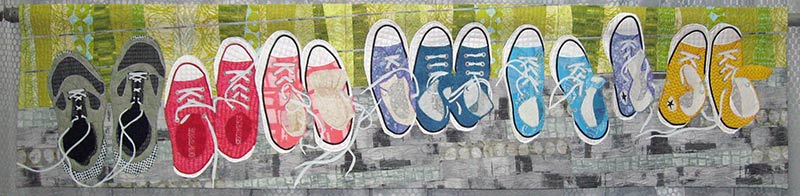
Wash Day, by Amy Selmanoff

I was especially entertained by their many challenges, and the quilts illustrating how the quilters interpreted them over the years. One of the challenges required the quilters to go to Page 13 in any magazine, and choose something from that page to inspire a quilt. One of these is pictured, the supposed famous last words of Oscar Wilde by Joan Muth Levin. According to sources, as he lay dying, he said, “The wallpaper and I are fighting a duel to the death. Either it goes or I do.”

The guild’s 2017 challenge was a Fat Quarter challenge. Members received six fat quarters, and had to use at least 4 of them, plus 2 other fabrics if they chose, to make a quilt 30” X 30”. The floral fabric had to be featured in some way. I loved the image created by Carol Rubin, in which she used both the right and the wrong sides of the red fabric to create her red, pink, and white checkerboard tablecloth; the floral was used to make a bouquet for the table.

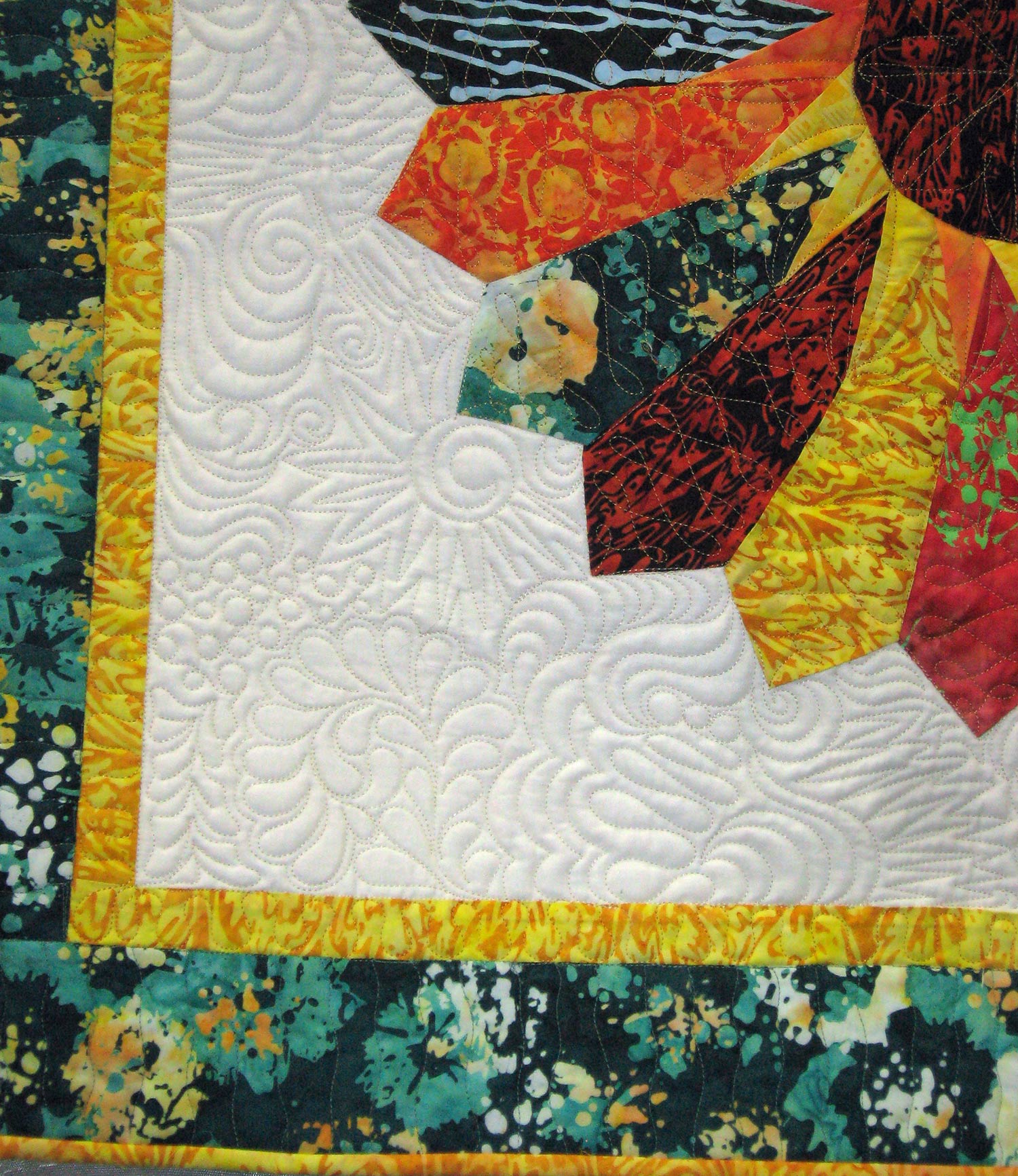
Stunning quilting example

While at the show, I learned of an interesting national quilt block swap that you might enjoy. Read more about it here.

By |2017-04-03T09:08:31-04:00March 23rd, 2017|uncategorized|0 Comments

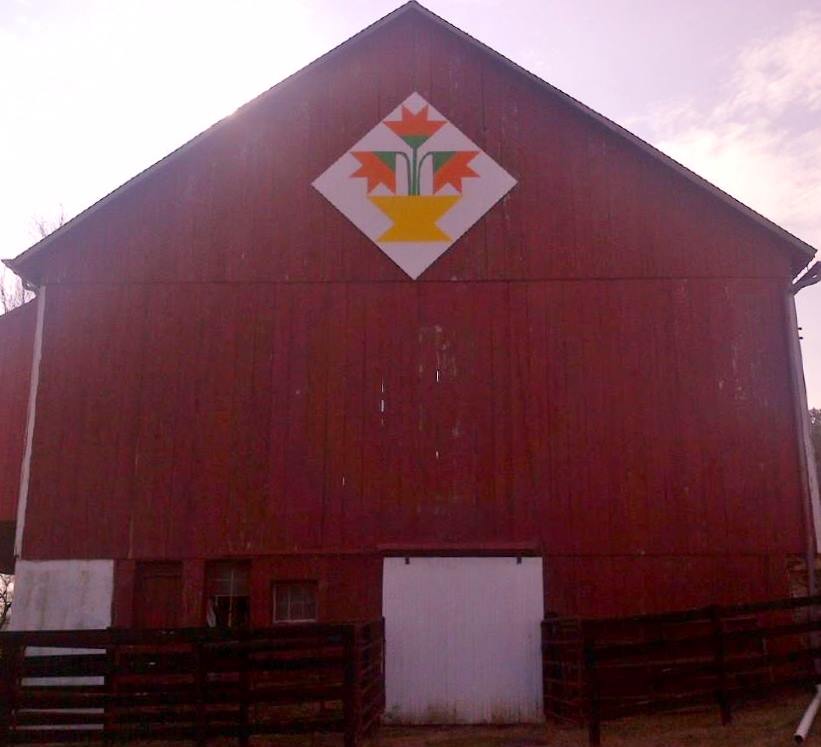
Maryland Barn Quilt Trails

Looking for something fun to do?  Go on a Barn Quilt Trail Tour.  Maryland has as least two, located in Carroll County and Garrett County.

Photo courtesy Carroll County Office of Tourism with permission.

Carroll County, MD Barn Quilt Trail

Visit http://carrollcountytourism.org/barn-quilt-trail/ for details.  A tour list, brochure and tour map can be found here.

The Carroll County Barn Quilt Trail is a partnership between the Carroll County Office of Tourism, the Carroll County Arts Council, Everybody’s Quilt Guild and the Carroll County Department of Recreation & Parks. The driving trail features 27 scenic barns adorned with a large colorful quilt block. The barn quilt trail is a great way to celebrate this traditional American art form as well as experience the beautiful scenery of Carroll County. -Excerpt From CarrollCountyTourism.org

Garrett County, MD Barn Quilt Trail

Forty-two beautiful barn quilts can be found on this trail.  Visit http://garrettbarnquilts.org/ for details and for a printable tour map.

Our group of volunteers share a vision of expanding local tourism, sharing our heritage, and educating the public and celebrating our farms, barns, & quilting culture in our beautiful Appalachian mountains. – Excerpt from garrettbarnquilts.org

By |2017-02-23T18:07:03-05:00February 22nd, 2017|uncategorized|0 Comments

Local Quilt Shop Day Sat Jan 28

Local Quilt Shop Day is a worldwide celebration for independently owned quilt shops everywhere, meant  to connect retailers and fabric lovers.  It will be held on Saturday, January 28, 2017 with special events, depending on your shop. Quilt shops everywhere can choose to participate in their own way, without being an officially registered participating shop.  Make sure to check with your favorite LQS to see if they are celebrating with a special offering this day.

One popular shopping destination among our guild members, Old Country Store in Intercourse, PA, is offering 25% off all sewing notions, drawings to win fabric and free cookies served throughout the day on January 28.

Click here to check what is happening in your area from participating shops.  If you don’t see your favorite LQS on the list, ask them to join in the celebration!


By |2017-01-20T23:18:40-05:00January 20th, 2017|uncategorized|0 Comments

Quilts for Neo-Natal Intensive Care Unit

This article is submitted by Jackie Hesselton who is a healthcare manager at MedStar Health:

The NICU (23 beds, newly renovated and state of art) at MedStar Franklin Square would welcome hand crafted quilts to cover the isolettes/bassinets of the smallest of our patients. Quilts should be 100% cotton, carefully constructed to avoid loose threads and measure anywhere from 18 x 24″ to 36x 36-40″ (preferable). Please avoid flannel.

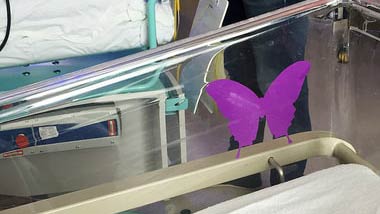
Here is a link to the story of the purple butterfly found on some bassinets. http://www.usmagazine.com/celebrity-moms/news/what-purple-butterfly-stickers-at-the-hospital-mean-w211508  This indicates that the baby was part of a multiple birth and not all babies survived, therefore I would avoid the use of purple butterflies. I will collect the quilts at each guild meeting and deliver them once we have 10 or 12. The NICU team appreciates the gesture.

Thank you.

Jackie

By |2017-01-17T19:05:01-05:00January 10th, 2017|uncategorized|0 Comments
Go to Top